
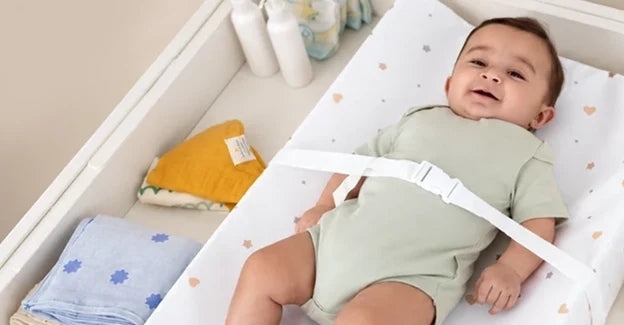
Some baby purchases take a little more thought than you expect. A diaper changing pad might seem straightforward, until you start comparing sizes, fabrics, shapes and washing instructions. Suddenly, something meant to make your day easier becomes another decision on your list.
You can keep this choice simple. Think about where you will change your baby, how often you will carry the pad around and what cleaning routine feels manageable. The right option should fit comfortably into your everyday life.
Whether you need a changing table pad for the nursery or a foldable mat for outings, these seven considerations will help you choose with more confidence.
1. Size and Portability
Start with the space you actually have. Before ordering a changing table pad, measure the changing area and check the furniture manufacturer’s guidance on compatible pads. Compare the measurements with the product dimensions rather than judging its size from photographs.
Your baby needs enough room to lie comfortably, but the pad should fit securely within its intended changing area. Check any age, weight or size limits, too.
For outings, look at the folded dimensions as well as the open size. A generous mat may sound useful, but it needs to fit inside your changing bag alongside nappies, wipes and spare clothes.
2. Padding and Comfort
You want your baby to feel comfortable during changes, especially when they would much rather be cuddling or feeding. Look for an even, supportive surface with enough cushioning for its intended use.
Thickness alone does not tell you how comfortable a pad will be. Check the construction, surface texture and whether the padding holds its shape. Product descriptions should explain what sits beneath the outer layer.
A portable diaper changing pad will usually offer less cushioning than a pad designed for a changing station. That can be a reasonable trade-off when you need something compact.
3. Durability and Easy Cleaning
Little accidents are part of changing time, so choose a pad with care instructions you can realistically follow. You deserve something that helps with the clean-up without creating a complicated extra chore.
Check whether the surface wipes clean, whether the cover is removable and whether any fabric sections can go in the washing machine. Do not assume the whole pad is washable just because its cover is.
Look closely at seams, folds and textured areas. These details can affect how easily you reach small messes. For a reusable fabric mat, drying time matters, particularly if you want to use it again later that day.
Waterproof and absorbent describe different features. An absorbent layer takes in moisture, while a waterproof backing helps protect the surface underneath. Read the description carefully to understand what you are buying.

4. Safety Features
When you are comparing a changing table pad, check how it attaches to the changing unit and whether the manufacturer specifies compatible furniture. Follow the installation instructions rather than improvising a way to secure it.
Raised sides, straps and a grippy base may be useful features, but they do not replace your attention. Keep a hand on your baby when using a raised changing surface, and never leave them unattended, even briefly. Have your supplies ready before you begin.
If you prefer changing your baby on the floor, a suitable mat offers a straightforward option without the risk of falling from a changing table. Choose a clear space where you can stay comfortably beside them.
Before buying, check that fastenings are secure and there are no loose decorative pieces. A reassuring setup comes from choosing suitable equipment and using it as directed every time.
5. Non-Toxic Materials
Material labels can feel confusing, especially when several products promise to be “natural” or “baby-safe”. You do not need to understand every technical term, but you should be able to find clear information about the pad’s construction.
Look for details about the outer surface, filling and waterproof layer. If the listing mentions testing or certification, check what it covers. A claim about one fabric component does not necessarily describe the complete product.
Treat broad promises such as “chemical-free” cautiously. Specific material information is more helpful when you are comparing options.
If your baby has a known sensitivity, check the materials and any care products needed before purchasing. Avoid assuming that a particular fabric will prevent irritation.
You can also ask the seller questions when the listing is unclear. Knowing what touches your baby’s skin can make the decision feel much less uncertain.
6. Design and Style
Once you have checked the practical details, you can enjoy choosing a design you like. Whether your nursery has gentle neutrals or cheerful colours, there is room for a pad that feels at home in your space.
Think beyond the print. Consider whether the shape fits your changing station, how easily the pad stores away and whether replacement covers are available in the right size.
For travel, a design that folds the changing surface inwards may appeal to you. Check whether pockets remain accessible when the mat is open and whether the fastening is easy to manage.
Choose features you will actually use. A simple diaper changing pad can be just as useful as one with several compartments, particularly if your changing bag already keeps everything organised.
Ready to choose? Explore Nintara Baby and check the product details against your needs. Take your time, choose a changing setup that feels manageable for you.


