
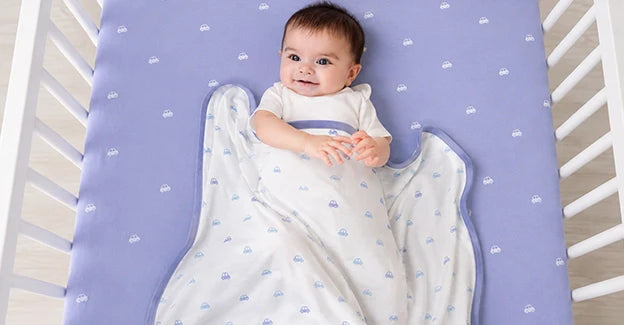
Blankets are one of those sweet little things that make baby shopping feel real. You see soft colours, tiny prints, cosy textures, and suddenly it is very tempting to fill the cot with the cutest baby blankets. Add in matching baby bedding sets and all those lovely products for babies, and it can feel like your little one’s sleep space needs to look warm, full and picture-perfect.
But baby sleep is one area where simple is usually safest.
If you are wondering when your baby can safely sleep with baby blankets, the answer depends on their age, movement, sleep set-up and how the blanket is being used. A blanket for cuddles during supervised time is not the same as a loose blanket in the cot overnight. That small difference matters a lot.
Is it safe for babies to sleep with blankets?
For newborns and young babies, loose blankets in the cot are not considered the safest choice. Babies are still learning how to move, turn their heads and free themselves if fabric covers their face. A loose blanket can ride up, bunch around the mouth or nose, or make your baby too hot.
That is why safe sleep advice usually says to keep your baby’s sleep space clear. The cot should be firm, flat and simple. No pillows, no duvets, no soft toys, no cot bumpers and no loose bedding around your baby’s face.
This does not mean blankets are bad. It means they need to be used in the right way, at the right age and in the right setting.
For the early months, many parents use a baby sleeping bag, sleepsuit or carefully chosen layers instead of loose bedding. If a blanket is used, it should be lightweight, breathable, tucked in firmly and kept no higher than the shoulders. Your baby’s feet should be placed near the foot of the cot so they cannot wriggle down under the blanket.
When can I introduce a blanket?
Many experts suggest waiting until your baby is at least 12 months old before introducing a loose blanket for sleep. By this age, babies are usually stronger, more mobile and better able to move away from something that bothers them during sleep.
Even then, it is best to start small and simple. Choose a lightweight blanket rather than something thick, fluffy or oversized. Avoid heavy quilts, weighted blankets or anything with long tassels, loose threads or bulky decorations.
A good first blanket should be easy to wash, soft on the skin and breathable. This is where thoughtful options like Nintara Baby The Breezy Blanket can come in handy for supervised use, pram time or later-stage sleep routines when your child is ready.
Before using a blanket at bedtime, ask yourself a few simple questions. Can your baby roll both ways? Can they sit up or move around confidently? Do they seem able to push fabric away from their face? Is the blanket light and the right size?
If the answer is yes and your baby is over 12 months, you can slowly introduce a blanket. Start during naps when you can check on them easily. Keep the cot uncluttered and avoid adding too many extras at once.
For toddlers, baby blankets can become part of a cosy bedtime routine. They can signal sleep, comfort and calm. But they should still be safe, light and suitable for the season.

When can I put my baby to bed swaddled in a blanket, and when is it no longer safe?
Swaddling is different from placing a loose blanket over your baby. A swaddle wraps your baby snugly, often helping newborns feel secure and settled. Some babies love it because it reminds them of the womb and helps calm their startle reflex.
The big rule is this: stop swaddling as soon as your baby shows signs of trying to roll. For some babies, this can happen around 2 months. Once a baby can roll, being wrapped with their arms restricted can become risky because they may not be able to push themselves back or adjust their position.
When swaddling is no longer safe, you can move to a sleep sack or wearable blanket. This keeps your baby warm without loose fabric in the cot. It also gives their arms freedom to move, which is important once rolling begins.
For daytime snuggles, tummy time on a clean surface, stroller walks or cuddles with you nearby, a soft blanket like Nintara Baby The Everyday Blanket can still be useful. Just keep sleep safety rules separate from awake-time comfort.
How do I keep my baby warm without a blanket?
This is the worry most parents have. If there is no blanket in the cot, will the baby feel cold? Usually, babies do not need as many layers as adults think. A simple rule is to dress your baby in one more light layer than you are wearing. If you are comfortable in the room, your baby probably does not need to be bundled up heavily.
Why Choose Nintara Baby
For cosy moments before bed, Nintara Baby The Little Comforter can help create a gentle wind-down routine, as long as it is used with supervision and kept out of the cot for younger babies. Think of it as a comfort item for cuddles, not a sleep-space essential for newborns.
When your baby grows into toddlerhood, you can explore more complete options such as Nintara Baby The Ultimate Blanket Bundle, especially if you want everyday comfort, easy washing and pieces that work across naps, travel and cuddle time.
The bottom line is simple. Blankets are lovely, but timing matters. When choosing baby bedding sets or products for babies, go for comfort, quality and safety over anything too bulky or decorative. For soft, practical pieces made with little ones in mind, explore Nintara Baby.


