
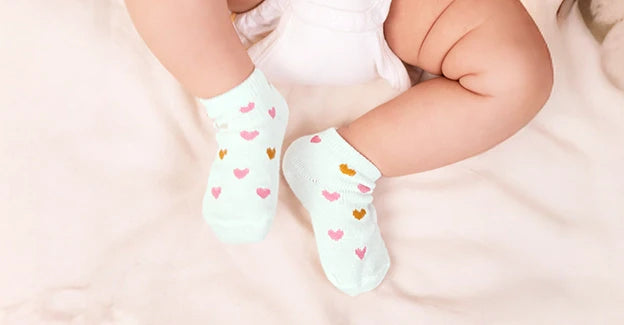
Bringing a newborn home comes with a long list of tiny decisions. One of the simplest yet surprisingly confusing ones is this: do newborns actually need socks? Those little feet are adorable, but also delicate, and it is natural to wonder what is best for them. We at Nintara Baby break this down in a simple, practical way so it feels less overwhelming.
Do Newborns Need Socks?
Short answer. Yes, but not always because we have to factor in weather as well, right? Newborns are not very good at regulating their body temperature. Their hands and feet often feel colder than the rest of their body. That does not always mean they are uncomfortable, but it does mean they may need a little help staying warm.
Socks can be useful for keeping tiny feet cosy, especially in cooler environments or air-conditioned rooms. Think of them as part of essential new born baby accessories that help maintain comfort rather than a strict necessity at all times.
However, if the weather is warm and the baby is dressed appropriately, socks are not mandatory. Bare feet are perfectly fine indoors when the temperature is comfortable.
A simple rule to follow is this. If adults feel like wearing light layers, babies probably need an extra one too. That is where newborn baby socks come in handy.
Why Socks Matter in the Early Months
In the first few months, socks serve two main purposes. Warmth and protection. Baby skin is extremely sensitive. Socks act as a gentle barrier against dust, minor bumps, and rough surfaces. They also prevent scratching if babies rub their feet against each other.
That said, comfort is key. Tight socks can leave marks or restrict movement, which is not ideal. Soft, breathable materials are always the better choice.

When Should Babies Start Wearing Socks Regularly?
This is where things get interesting.
In the newborn stage, socks are mostly about warmth. But as babies grow and start moving, socks begin to serve a different purpose.
Once babies start rolling, crawling, and attempting to stand, their feet become tools for exploration. At this stage, the type of socks matters more than just wearing them.
Regular socks can sometimes be slippery, especially on smooth floors like tiles or wooden surfaces. That is when specially designed options like Nintara Baby Anti-Slip Socks become useful.
The Transition from Warmth to Movement
Around 6 to 12 months, babies become more active. Crawling turns into pulling up, and pulling up turns into those wobbly first steps.
During this phase, grip is important. Slipping can lead to small falls, which can make babies hesitant to explore further.
Anti-slip socks are designed exactly for this stage. They come with silicone grips on the soles that help improve traction. This means better balance and more confidence while moving.
Products like Nintara Baby Anti-Slip Baby Socks are made from soft, breathable fabric that keeps feet comfortable while also adding that much-needed grip. They are gentle on delicate skin and designed to stay on without constant adjusting, which every parent knows is a big win.
Do Babies Need Socks While Learning to Walk?
This is a common question. Experts often suggest that barefoot walking indoors is actually beneficial for developing balance and foot strength. Babies can feel the ground better and learn how to stabilise themselves.
However, real-life situations are not always ideal. Floors can be cold, slippery, or not entirely clean. In such cases, anti-slip socks provide a practical middle ground.
They offer warmth and protection without the stiffness of shoes. They also help reduce slipping on smooth surfaces, making them suitable for indoor use during early walking stages.
Choosing the Right Socks for Your Baby
Not all socks are created equal, especially when it comes to babies. Here are a few things to keep in mind:
1. Fabric matters
Soft and breathable fabrics are essential. Babies have sensitive skin, so harsh materials can cause irritation.
2. Fit is important
Socks should be snug but not tight. A stretchy, comfortable fit ensures they stay on without leaving marks.
3. Grip for active stages
Once babies start moving, anti-slip soles are a great addition. They help reduce accidents and support movement.
4. Ease of use
Parents already have enough to handle. Socks that stay on and do not require constant fixing make life easier.
Many of the best baby brands in India now focus on combining comfort with functionality, which is exactly what parents need.
Common Problems Socks Can Solve
It may seem like a small item, but the right socks can resolve several everyday issues.
-
Cold feet during indoor play can make babies uncomfortable. Socks help maintain warmth.
-
Slipping on smooth floors is another common problem, especially in homes with tiles or polished wood. Anti-slip designs help reduce this risk.
-
Then there is the issue of socks that keep falling off. A good fit ensures they stay in place, saving time and frustration.
These small improvements can make a big difference in daily routines.
When Not to Use Socks
There are times when socks are not necessary.
-
In hot weather, keeping feet uncovered can help prevent overheating. Babies regulate temperature better when they are not overdressed.
-
Also, during supervised playtime on safe surfaces, allowing babies to go barefoot can support natural foot development.
It is all about balance. Socks are a tool, not a rule.
Parenting is full of small decisions that feel bigger than they actually are. Socks are one of those things. Newborns may need socks for warmth and comfort, especially in cooler environments. As babies grow and become more active, socks can support movement and safety, particularly when designed with anti-slip features.
Choosing the right pair can make daily life a little easier and a lot more comfortable for tiny feet. If there is a search for something that combines comfort, grip, and practicality, it might be worth exploring options like Nintara Baby.


