
Dressing a baby for sleep can feel like a small puzzle, especially in India where the weather can change so quickly. One day may be hot and sticky, the next may bring a cool monsoon night, and winter can feel completely different depending on whether you live in Mumbai, Delhi, Bengaluru, Pune or the hills.
Safe layering does not need to be stressful. The simple rule is to keep your baby comfortably warm without making them too hot or covering their face with loose bedding. Instead of focusing only on the weather outside, think about how the room actually feels. A hot summer evening may still become cool with the AC on, while a winter room can become stuffy if the heater is running all night.
Start with a safe sleep space
Before thinking about baby blankets, make sure your baby’s sleep space is simple and clear. Your baby should sleep on their back, on a firm and flat mattress, with their face and head uncovered. Avoid placing pillows, soft toys, thick quilts, duvets, bolsters, cushions or loose bedding around the baby.
In many Indian homes, it is common to use soft razais, heavy quilts or folded blankets during cooler weather. These may feel cosy for adults, but they are not ideal for young babies during sleep. Thick bedding can become too warm and may move around while your baby is sleeping.
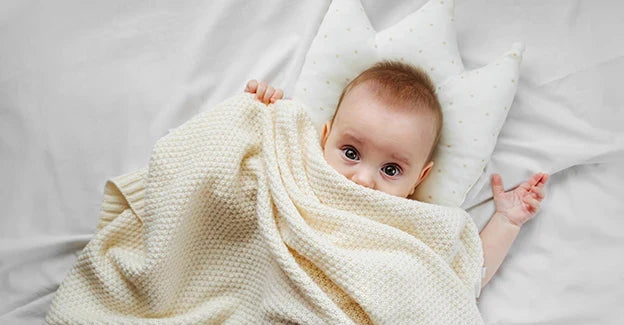
If you choose to use a blanket, select a lightweight cotton or muslin blanket. Place your baby with their feet at the bottom of the cot or crib, then tuck the blanket securely under the mattress on both sides. The blanket should come only up to the shoulders, never near the face.
Hot summer nights
Indian summers can be intense, especially in cities where temperatures stay high even after sunset. During hot weather, babies usually need fewer layers, not more.
A lightweight cotton vest or short-sleeved bodysuit may be enough in a warm room. If the room is slightly cooler because of AC, a light baby sleepsuit can be added. In very hot and humid conditions, many babies are comfortable in just a nappy and a thin cotton layer.
A fan can help circulate air, but avoid pointing it directly at your baby for long periods. If using an air conditioner, keep the room comfortably cool rather than making it cold. Avoid placing the cot directly under the AC vent, as a constant cold blast can make your baby uncomfortable.
During daytime naps, keep the room shaded by closing curtains or blinds when the sun is strong. Avoid placing a blanket over a pram or stroller to block sunlight. It may trap heat inside and reduce airflow.
Humid monsoon weather
Monsoons can be confusing because the weather may feel warm in the afternoon and chilly after a heavy shower. Humidity can also make your baby sweat more easily, even when the room does not feel extremely hot.
For monsoon nights, breathable fabrics are your best friend. Choose soft cotton baby clothes that allow air to move around the skin. A cotton vest with a full-sleeved sleepsuit may work well for many babies. If the room feels cooler later in the night, add one lightweight blanket that is securely tucked in.
Avoid woollen blankets during damp and humid weather unless the room is genuinely cold. Thick fabrics can trap heat and may make babies sweaty. If clothes become damp from sweat, change your baby into a dry layer before sleep.
Air-conditioned rooms
AC rooms can be very comfortable for babies, but the layering needs to be adjusted carefully. It is easy to make the room too cold and then add too many blankets. A better approach is to keep the AC at a moderate setting and dress your baby in light layers.
A cotton vest and a full-sleeved baby sleepsuit are often enough in an air-conditioned room. If needed, add one thin cotton blanket tucked securely below the shoulders. Avoid thick quilts, razais and fleece blankets, even if the room feels chilly to adults.
Mild winter weather
Winter in cities like Mumbai, Chennai or parts of Bengaluru may feel cool but not freezing. In these conditions, a cotton vest, a full-sleeved sleepsuit and a light blanket can usually be enough. Focus on comfort rather than adding lots of thick layers.
Soft baby rompers can be useful for daytime wear, but bedtime clothing should be simple, secure and breathable. Avoid hooded outfits, scarves, socks that keep slipping off, or hats during sleep. Hats can make babies too warm and may move over the face.
A light blanket tucked properly is safer than a bulky comforter. If the room becomes warmer later in the night, remove one layer rather than waiting for your baby to become sweaty.

Cold winter nights
Winter can be much colder in North India, especially in Delhi, Chandigarh, Jaipur, Lucknow and hill stations. Even then, piling up blankets is not the safest answer.
Start with a comfortable cotton vest, then add a full-sleeved sleepsuit. A light cardigan or an extra clothing layer may be useful before bedtime, but avoid bulky outerwear once your baby is sleeping. If using blankets, choose lightweight layers that are tucked securely in place instead of one heavy quilt.
A well-fitting sleep sack can be easier than managing loose blankets. Nintara Baby Sleep Sacks can be a helpful option for parents who want a more secure alternative to layering multiple blankets. Always choose the right size, follow the product instructions and avoid adding a blanket over the sleep sack.
Remember that every baby is different. Premature babies, newborns, and babies with health concerns may need personalised advice from a paediatrician.
Nintara’s Baby Bedding Sets can help create comfortable, coordinated bedtime layers for changing Indian weather. Keep it simple, keep it breathable and choose comfort over bulky bedding. Explore everyday baby essentials from Nintara Baby.


