
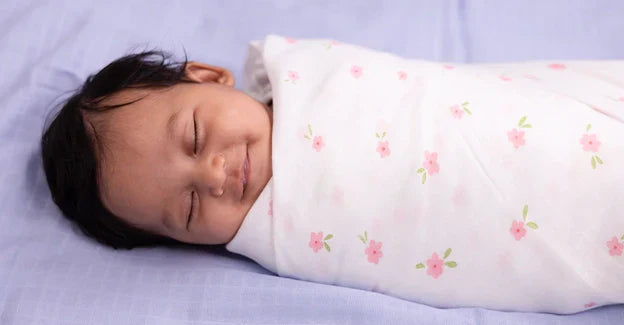
Hot weather can make sleep feel like a bit of a puzzle. You want your baby to feel snug and settled, but you also want to avoid overheating. That is exactly why swaddling in summer needs a slightly different approach than wintertime wrapping.
Swaddling can still be a gentle, calming option for many newborns, especially in those early weeks when the startle reflex is strong. Choosing the right baby swaddle for newborn is key, as it should allow proper airflow, use light layers, and support safe, comfortable sleep.
Below are practical do’s and don’ts, written for real life. No complicated jargon. Just clear steps you can use tonight.
Why summer swaddling needs extra care
Babies cannot regulate body temperature as efficiently as adults. In warm rooms, even an extra layer can push them from “cosy” to “too hot” quickly. Overheating is also linked with higher SIDS risk, so keeping the temperature sensible matters. Many UK safe sleep resources recommend keeping the room around 16–20°C and using light bedding or a lightweight sleep bag when needed.
So yes, swaddling in summer can be done, but it should feel light, breathable, and never bulky.
The Summer Swaddle Do’s
1) Do choose breathable, lightweight fabric
Thin cotton or muslin is usually the safest go-to in warm weather. Several UK baby sleep organisations advise using thin swaddling materials to reduce the risk of overheating. If a wrap feels thick in your hands, it will likely feel hotter on your baby.
2) Do keep layers simple
In summer, baby often needs less clothing underneath than expected. In a warm room, a short-sleeved vest or even just a nappy may be enough, depending on temperature. The goal is “light layers that can be adjusted”, not “bundle up and hope”.
A helpful rule: adjust one small layer at a time. If baby seems warm, remove the vest first rather than loosening the swaddle into a risky, floppy blanket.
3) Do follow safe sleep basics every single time
Swaddled or not, baby should be placed on their back for sleep. This is a repeated recommendation across safe sleep guidance. Also keep the cot clear: no pillows, duvets, bulky blankets, or soft toys near the face.
4) Do leave room for hip and leg movement
A safe swaddle is snug around the chest and arms, but not tight around the hips. Baby’s legs should be able to bend up and out naturally. This helps protect healthy hip development. If the wrap pins the legs straight down, it is too tight.
5) Do check temperature the right way
Hands and feet often feel cool, even when baby is warm. Check the chest or the back of the neck instead. If the skin feels hot, sweaty, or clammy, baby is likely too warm.
6) Do pick a swaddle that stays secure
A loose wrap can ride up and become a suffocation risk. If using a blanket-style swaddle, make sure it is firm and tidy, with no loose corners near the face. Many parents prefer a structured option for summer because it stays in place without needing extra layers. Nintara Baby Swaddle wraps can be a handy choice here when used correctly, because a consistent wrap makes it easier to keep things light and secure.
The Summer Swaddle Don’ts
1) Don’t swaddle if baby is trying to roll
This one is non-negotiable. Once baby shows signs of rolling or trying to roll, swaddling should stop. The risk goes up if baby rolls onto their tummy while swaddled. If rolling attempts are starting, switch to an arms-free sleep sack or a different settling method.
2) Don’t add thick blankets on top
A swaddle plus a blanket is usually too much in summer. Thick layers trap heat and can also shift during sleep. If warmth is needed, it is safer to use appropriate lightweight sleep clothing rather than extra bedding.
3) Don’t cover baby’s head
Hats indoors during sleep are generally not recommended, particularly in warm weather, because they increase overheating risk. A good swaddle ends below the shoulders, with the face completely clear.
4) Don’t aim for “super tight”
A swaddle should feel like a gentle hug, not a restraining strap. Tight wrapping around the chest can affect breathing comfort, and tight wrapping around hips can affect hip positioning.
5) Don’t swaddle for naps in unpredictable heat without checking the room
Afternoon temperatures can climb fast. If the room warms up, reduce layers or skip the swaddle for that nap. A quick thermometer check can prevent a lot of worry later.

A simple summer swaddle routine (quick and calm)
-
Check room temperature and airflow (fan on low is fine, but not blowing directly on baby).
-
Dress baby lightly this simple step is a baby essential for safe and comfortable sleep. Start with a nappy and a vest if needed.
-
Use a thin wrap and keep it snug on the upper body, loose on hips.
-
Put baby down on their back, feet near the foot of the cot if using any blanket-style bedding guidance.
-
Re-check baby’s chest or neck after 10 minutes.
If baby wakes sweaty or flushed, adjust immediately. Comfort is the goal, but safety comes first.
“How do you know if baby is too hot?”
Look for:
-
Sweaty hair or damp neck
-
Flushed cheeks that stayred
-
Rapid breathing that seems unusual
-
Heat rash on chest or back
-
Fussiness that does not settle with usual soothing
If these show up, remove a layer and cool the room gently. Keep baby hydrated with regular feeds.
When swaddling stops working, try this instead
Some babies love swaddling, then suddenly decide they are done. If a structured wrap helps with consistency before rolling begins, Nintara Baby Swaddle wraps can support a tidy, breathable wrap routine in warmer months.
There is no perfect parent-only method, only safe options and small adjustments. Summer sleep can be fiddly, and that is normal. Stick to breathable fabric, minimal layers, and safe baby sleeping positioning. Keep checking temperature with your hand, not guesswork. And remember, swaddling in summer should feel light, secure, and easy to undo the moment the baby seems warm.
For parents who like a simple, dependable wrap for warm nights, Nintara Baby Swaddle wraps can be part of that routine, used with the safety do’s and don’ts above.


