
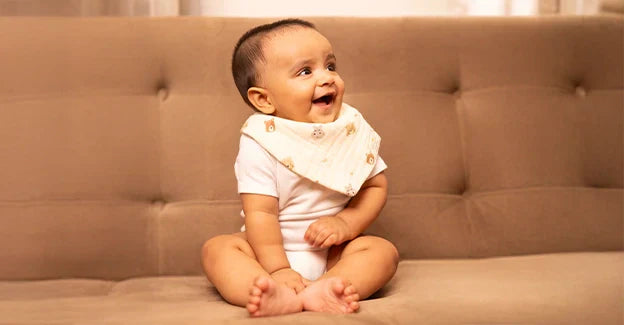
Watching your baby move from tiny breastfeeds to happily eat soft food one of the most beautiful journeys of early parenthood. It can also feel confusing, especially with so many opinions from family, friends, and the internet. If you’re an Indian parent wondering, “Am I feeding my baby right?”, you have a tribe of mommies with you.
Before we start, please know that every baby is different and that’s okay. Always check with your paediatrician if you are unsure, especially if your baby was premature or has any medical condition. So, dear mommies, sit tight with your Nintara Baby bibs and Nintara Baby wash cloths as you will need them the most.
Newborn to 6 months
Main nutrition: Breastmilk or formula
Breast is best. From birth to 6 months, breastmilk is usually all your baby needs. Most doctors and global health bodies recommend exclusive breastfeeding for about the first 6 months, which means no water, honey, juice, or solids unless advised for medical reasons.
Breastmilk changes according to your baby’s needs – it’s lighter and more watery in hot weather, richer during growth spurts, and full of antibodies. If breastfeeding is not possible or you’re combination feeding, infant formula is a safe alternative when used exactly as per the instructions.
How often should my baby feed?
In the first two months, doctors recommend feeding after every two hours. Newborns may feed 8–12 times in 24 hours. It can feel like you are feeding all day (and night!), but this is normal. Frequent feeding helps build your milk supply and comforts your baby.
Between 3-6 months, babies feed on demand whenever they show hunger cues such as:
-
Rooting (turning head towards your chest)
-
Sucking their hands
-
Becoming restless or fussy
-
Crying (a late hunger sign)
Do babies need water in this heat?
This is a very common worry. Even in hot Indian summers, if your baby is under 6 months and breastfeeding well (or on formula), they usually do not need extra water. Breastmilk already has the right balance of water and nutrients. Giving water too early can fill their tiny tummy and reduce milk intake. If you are concerned about dehydration (very few wet nappies, dry mouth, extreme sleepiness), speak to your paediatrician.
What about traditional foods like honey or cow’s milk?
For the first 6 months:
No honey (it can carry bacteria that are dangerous for babies).
No cow’s milk as a main drink – it is hard to digest and lacks the right nutrients.
Your baby’s tummy is still very delicate; breastmilk or infant formula is the safest choice.
6 to 8 months
Around 6 months, most babies are ready to begin solid foods, while continuing breastmilk or formula. This phase is all about tasting, exploring, and having fun; however, milk is still the main source of nutrition.
Signs your baby may be ready for solids
-
Can sit with support and hold their head steady
-
Shows interest in your food – watches you eat, tries to grab your plate
-
Opens its mouth when food comes near
-
Has lost the tongue-thrust reflex (doesn’t automatically push food out with the tongue)
If your baby isn’t showing these signs at 6 months, wait a little and try again, but do keep your paediatrician informed.
First foods – simple, soft, and familiar
Start with single-ingredient, easily digestible Indian foods, such as:
-
Mashed banana.
-
Steamed and mashed carrot, pumpkin, sweet potato, or lauki.
-
Rice cereal made at home from powdered rice, cooked very soft with breastmilk or formula.
-
Plain moong dal water gradually thickened to a soft mash.
Offer a few spoonfuls once a day to begin with. Your baby may eat very little at first – licking the spoon, spitting out, or making funny faces. This is normal. The goal now is to learn how to eat, not how much.
Texture matters
In the 6–8 month stage:
-
Food should be soft, smooth, and mashed – no lumps or hard bits.
-
You can use a spoon, or even feed with clean fingers, so the baby feels more secure.
-
Avoid adding salt, sugar, honey, or strong spices. Babies don’t need them, and it’s kinder to their kidneys and taste buds.
Some babies may take only one small meal a day initially. Others will quickly move to two. Follow your baby’s cues; if they turn away, clamp their lips, or cry, don’t force. Try again later.
7 to 12 months
From 7 months onwards, you gradually move from tasting to proper eating, while continuing breastmilk or formula. This is when many Indian households start introducing more “family-style” foods in baby-friendly textures. Some even try giving cow milk during these months, and if the child is able to digest it, it is fine.
More variety, slightly thicker textures
By now, you can increase solids to 2–3 small meals a day, with 1–2 snacks depending on the baby’s appetite.
Introduce:
-
Soft khichdi (rice + dal + vegetables, well-cooked and mashed)
-
Upma or daliya, cooked very soft and mashed
-
Mashed idli or dosa pieces soaked in warm water or sambar (mild, no chilli)
-
Egg yolk (well-cooked) if your doctor agrees
-
Small tastes of curd (plain, unsweetened)
You can gently progress textures from smooth mash to slightly lumpy, so baby learns to chew. Babies who stay on only purees for too long sometimes become fussy eaters later.
9–12 months: Closer to family food
By this age, many babies are ready to share a version of their regular home food. You can:
-
Offer chapati or phulka pieces softened in dal or vegetable curry (low spice, no whole chillies, and minimal salt).
-
Give small, soft pieces of cooked vegetables, paneer, or well-cooked chicken/fish (if non-vegetarian and approved by your paediatrician).
Provide finger foods like:
-
Steamed carrot sticks
-
Soft potato wedges
-
Small pieces of banana, chikoo, or papaya
Milk still matters: Continue breastfeeding or formula alongside solids. Most babies still need several feeds a day.
Go easy on salt and spice: Babies can eat mildly flavoured, home-cooked food, but avoid heavy chilli, too much oil, or very salty dishes.
Avoid choking hazards: Whole nuts, popcorn, raw apple chunks, hard sweets, grapes (unless cut into quarters), and big chunks of food can be dangerous. Always supervise.
A few gentle reassurances for Indian parents
-
“My baby eats less than other babies.”
Try not to compare. Sizes, appetites, and growth patterns differ from child to child. Look at your baby’s overall growth, activity, and mood.
-
“Some days my baby refuses everything.”
Appetite can drop during teething, minor illness, or growth phases. Continue offering small amounts of familiar foods, keep up with breastmilk/formula, and stay calm. Avoid force-feeding; it can create lifelong negative associations with food.
Feeding your baby in their first year is not about perfection, it’s about connection. There will be messy floors, rejected meals, and days when you wonder if anything actually went into your baby’s tummy. That’s okay.
With patience, love, and a flexible approach to this “feeding chart”, supported by the right baby feeding products, your baby will gradually move from comforting breastfeeds or bottles to joyful bites of family food.


